
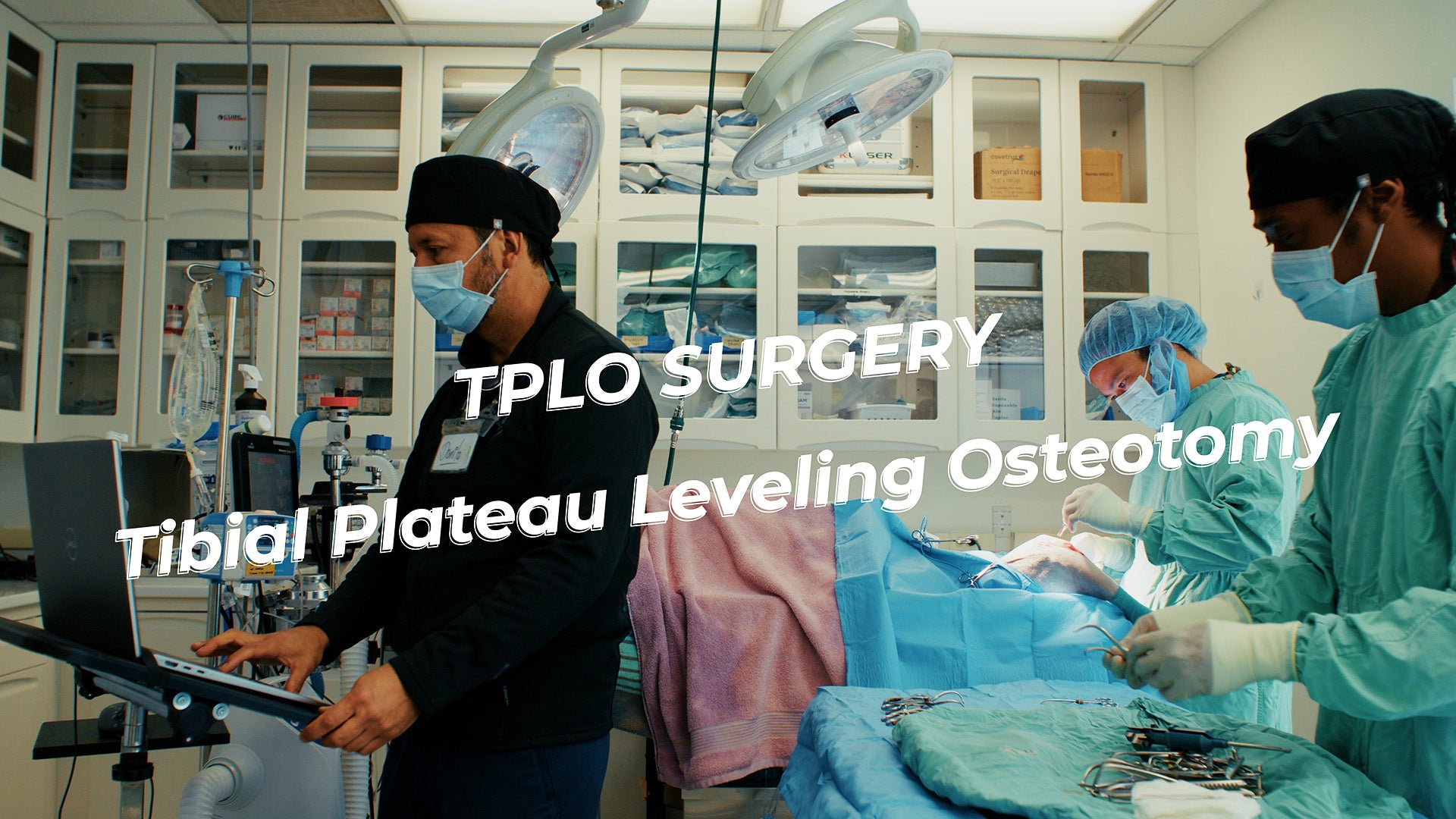
If your dog suddenly begins limping on a back leg or avoids putting weight on it, a cruciate ligament injury may be the cause. These injuries are one of the most common orthopedic conditions we see in dogs, especially in large breed dogs.
In this blog, Dr. Andrew Nguyen explains cranial cruciate ligament disease and how TPLO surgery (Tibial Plateau Leveling Osteotomy) can help dogs return to a comfortable, active life.

What Is Cranial Cruciate Ligament Disease?
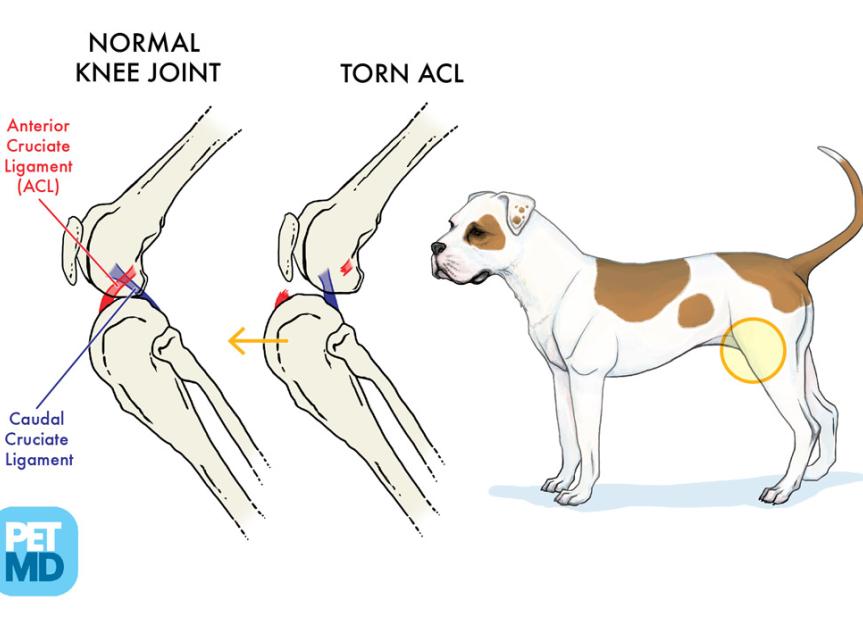
The cranial cruciate ligament is a small but critical ligament located deep inside your dog's knee, also called the stifle joint. Its job is to keep the knee stable during walking, running, and jumping.
When this ligament becomes damaged or torn, the knee becomes unstable. This instability leads to inflammation, pain, and a buildup of inflammatory fluid within the joint. Over time, this can cause arthritis and worsening discomfort if left untreated.
Cruciate ligament injuries can happen in any dog, but they are especially common in large breed dogs. Most dogs show signs of sudden lameness in one hind leg, although some injuries develop more gradually.
How Is a Cruciate Ligament Injury Diagnosed?
When your dog is examined, your veterinarian will perform specific physical exam tests, including the drawer test and the thrust test, to evaluate knee stability. X-rays are also an important part of the diagnostic process. While the ligament itself does not show up on X-rays, imaging helps identify joint swelling, arthritis, and other changes that support the diagnosis.
What Is TPLO Surgery?
TPLO surgery is a specialized orthopedic procedure that stabilizes the knee using biomechanics rather than replacing the torn ligament.


In a normal knee, the top of the tibia is slightly angled. Without a healthy cruciate ligament, this angle allows the femur to slide backward, creating instability and pain. During a TPLO procedure, the surgeon makes a precise semicircular cut in the tibia, rotates the bone to level the joint surface, and secures it with a plate. This adjustment prevents the sliding motion and restores stability to the knee.
By changing the mechanics of the joint, the knee can function comfortably even without the damaged ligament.
What Does Recovery Look Like After TPLO Surgery?
TPLO surgery is a major orthopedic procedure, and it is normal for pet owners to feel concerned about the recovery process. The good news is that most dogs begin to regain comfort within two to four weeks after surgery.
Bone healing continues over several months, with full healing of the surgical site typically occurring around five to six months. Most of the noticeable improvement happens within the first two to three months, especially when post-operative instructions are followed closely.
With proper care, most dogs are able to return to normal activity levels and enjoy an excellent long-term outcome.
Advanced Orthopedic Care at Columbia Pike
At Columbia Pike Animal Hospital and Emergency Center, TPLO surgeries are supported by experienced surgical staff, advanced anesthesia protocols, and comprehensive pain management. Our goal is to keep your dog as safe and comfortable as possible before, during, and after surgery.
We offer multiple treatment options for cranial cruciate ligament disease and will work with you to determine the best plan for your dog.
If your dog is limping or has been diagnosed with a cruciate ligament injury, we encourage you to schedule an appointment to discuss whether TPLO surgery is the right option.
Contact Information
Columbia Pike Animal Hospital and Emergency Center
Address: 4205 Evergreen Ln, Annandale, VA 22003
Phone: (703) 256-8414
Website: https://www.columbiapikeanimalh.com
Hours: Open 24/7 for emergency and general practice care