
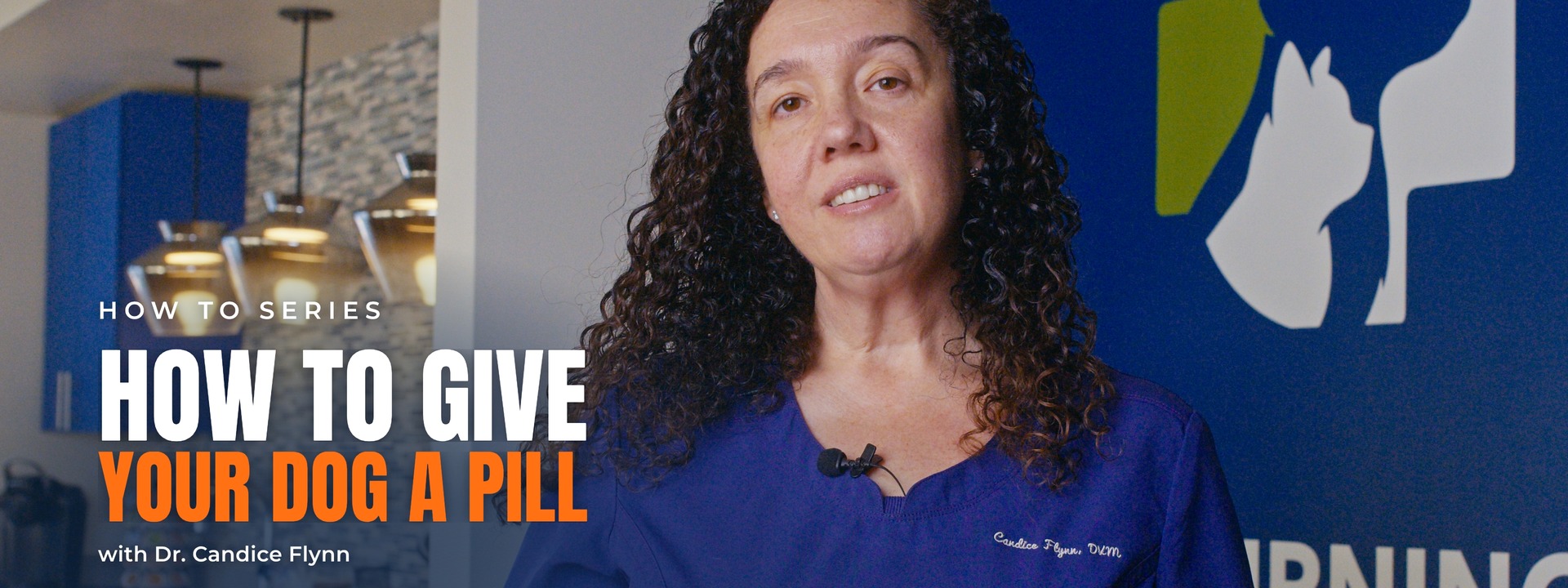
Your dog clamps their jaw shut the second they see the pill bottle. You've tried the cheese trick, the treat trick, holding their mouth closed and hoping. Somehow the tablet always ends up on the floor. Dr. Candice Flynn sees this daily, and in the newest episode of our How To series, she walks through the mistake most owners try first and the technique that actually works.
The Mistake Most Owners Make First
When a medication needs to go down and there's no time to negotiate, hiding the pill in dinner feels like the obvious move. Dr. Flynn asks her clients not to, especially with a dog who is picky or has food sensitivities. One bad-tasting pill is often all it takes for a dog to decide the bowl itself isn't safe anymore, and a dog who has stopped eating is a harder problem to solve than a dog who won't take a pill.
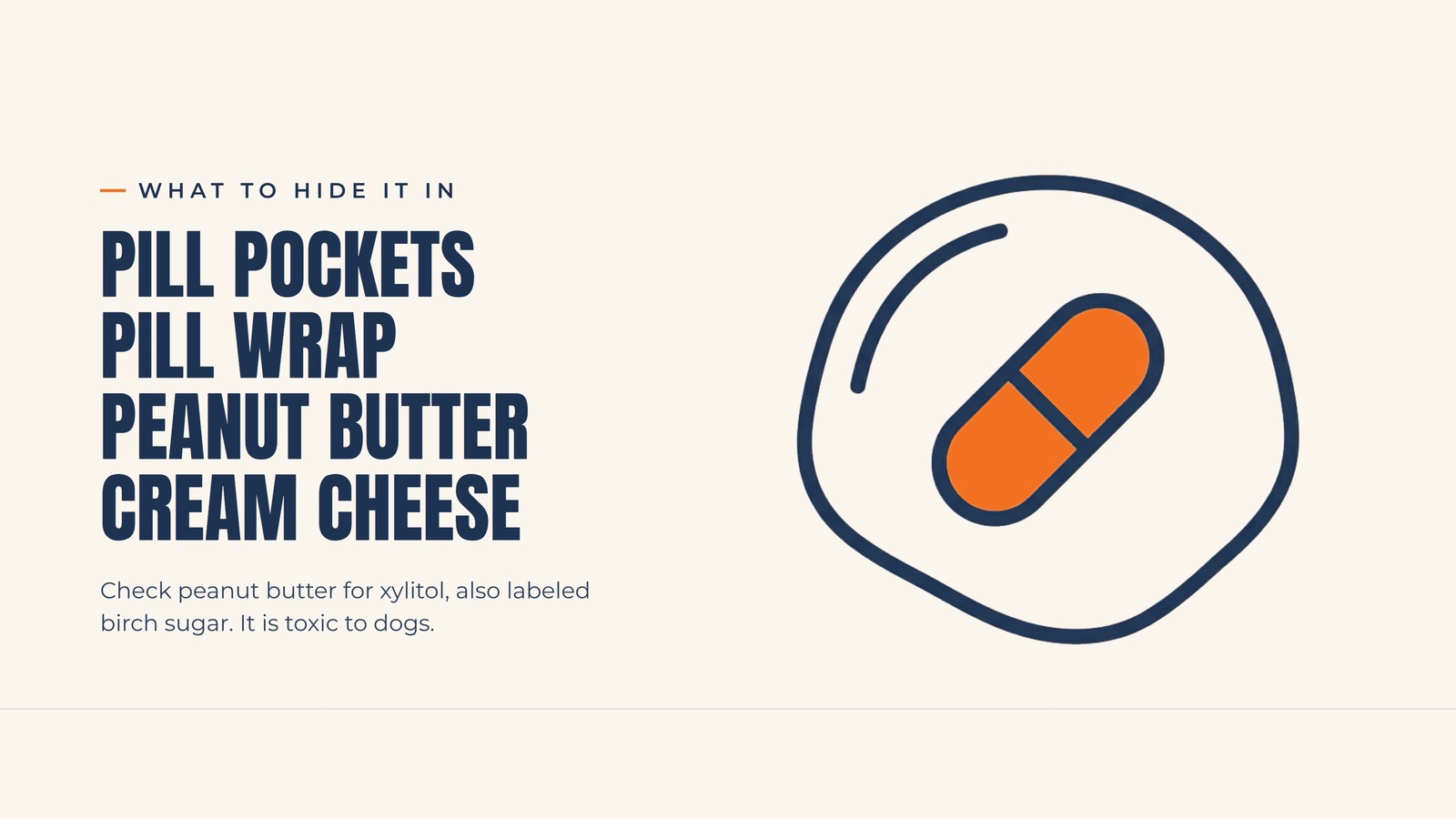
If you do hide it, pill pockets, pill wrap, cream cheese, or a small amount of peanut butter work better than burying it in a full meal. One caution on the peanut butter: check the label for xylitol first. It's sometimes listed as birch sugar or wood sugar, and it's toxic to dogs even in small amounts.
Where the Pill Actually Goes
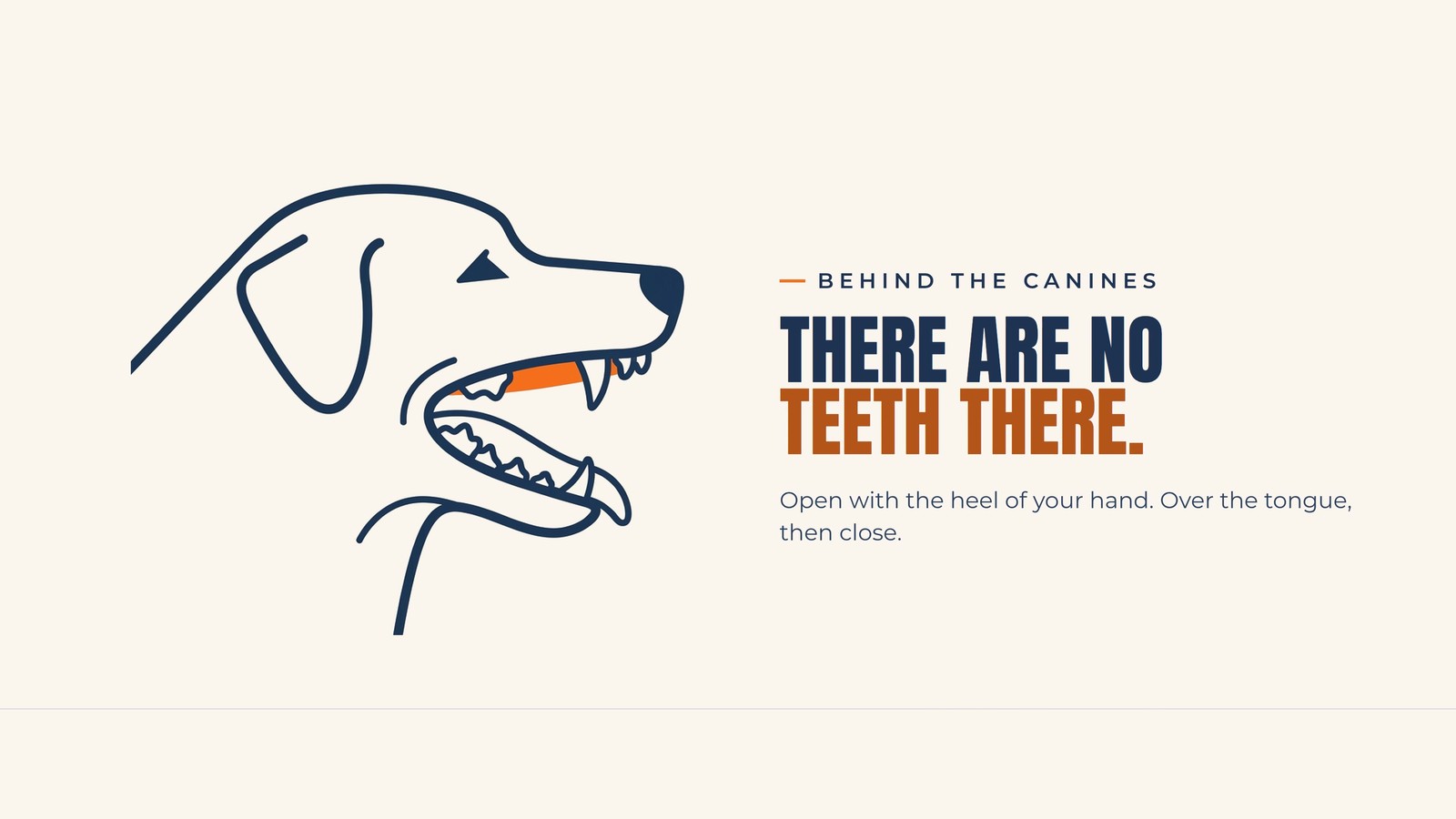
Most owners aim for the front of the mouth, which is the part with all the teeth in it. Behind the canines there's a gap with no teeth at all, and that's where a pill is supposed to land. Dr. Flynn shows the hold, the angle, and the part almost everyone skips: keeping the mouth closed and waiting to actually see the swallow before letting go.
She's also quick to point out what not to do. Clamping the jaw or tilting the head straight up doesn't help. Try swallowing yourself with your head tipped back, it's harder than it sounds, and it's harder for your dog too.
Why Staying Calm Matters as Much as the Technique
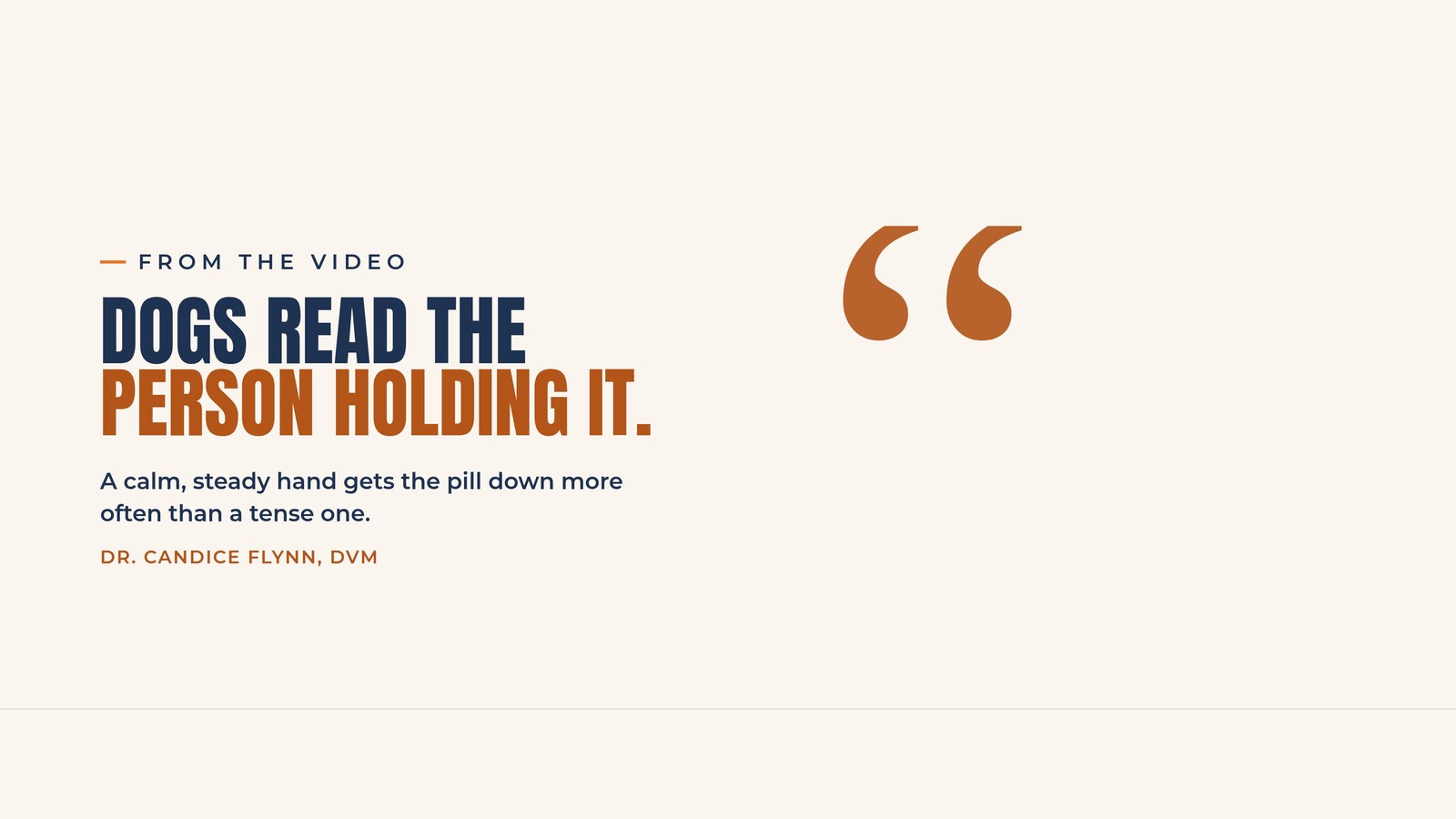
The most useful thing Dr. Flynn says in the video isn't about the pill at all. Dogs read the person holding it. If you've already braced for a fight, your dog usually knows before you've opened your hand, and the whole thing gets harder for both of you. A calm, steady hand gets the pill down more often than a tense one, technique aside.
The video follows two real patients through it: Roo, 18 years old and on several medications, and Frankie, a much bigger two-year-old who had never been pilled before. Watching the same technique work on both is the best proof that it isn't about the dog's size or temperament. It's about the hand doing the holding.
Frequently Asked Questions
Q: Why shouldn't I hide my dog's pill in their food?
A: One bad-tasting pill is sometimes all it takes for a dog to stop trusting their bowl, especially if they're already a picky eater. A dog who won't eat is a bigger problem than a dog who won't take a pill, so it's worth trying a pill pocket or a small treat instead of burying it in a full meal.
Q: Where does a pill actually go in my dog's mouth?
A: Behind the canines, not the front teeth. That's the gap with no teeth in it. Dr. Flynn's method is to get the pill there, keep the mouth closed, and wait for the swallow before letting go.
Q: Is peanut butter safe to use for pills?
A: Most peanut butter is fine, but check the label for xylitol first. It's sometimes listed as birch sugar or wood sugar, and it's toxic to dogs even in small amounts.
Q: What if my dog spits the pill back out?
A: Try again. Dr. Flynn says it happens to her too, and one failed attempt doesn't mean the technique isn't working.
Q: Why does my dog fight me every time I try to give them a pill?
A: Dogs pick up on how their person is feeling. If you're already tense before you've started, your dog usually knows it. A calm, steady approach makes the whole process easier for both of you.
Schedule a Visit
If your dog is starting a new medication and the two of you are struggling with it, our team is happy to walk through the technique with you at your next visit. And if you ever notice signs of a reaction to a new medication, drooling, vomiting, swelling, or trouble breathing, Columbia Pike is open 24/7 with no additional emergency fee.
| Schedule an Appointment | Call the 24/7 ER: (703) 256-8414 |
Columbia Pike Animal Hospital & Emergency Center
4205 Evergreen Ln, Annandale, VA 22003
Love People. Love Pets.